

HKBU Physics Hosts Mini-Workshop on Computational Frontiers in Biological Dynamics
HKBU Physics Hosts Mini-Workshop on Computational Frontiers in Biological Dynamics
10 November 2025 — Hong Kong
The Department of Physics hosted the Mini-Workshop on Computational Frontiers in Biological Dynamics on 10 November 2025 at OEE601, HSH Campus. The event brought together leading scholars, early-career researchers, and postgraduate students from across Hong Kong and Mainland to explore emerging advances at the interface of biophysics, computational modeling, and artificial intelligence. Throughout the day, the workshop fostered active dialogue and collaboration, creating a dynamic platform for exchanging ideas across institutions.
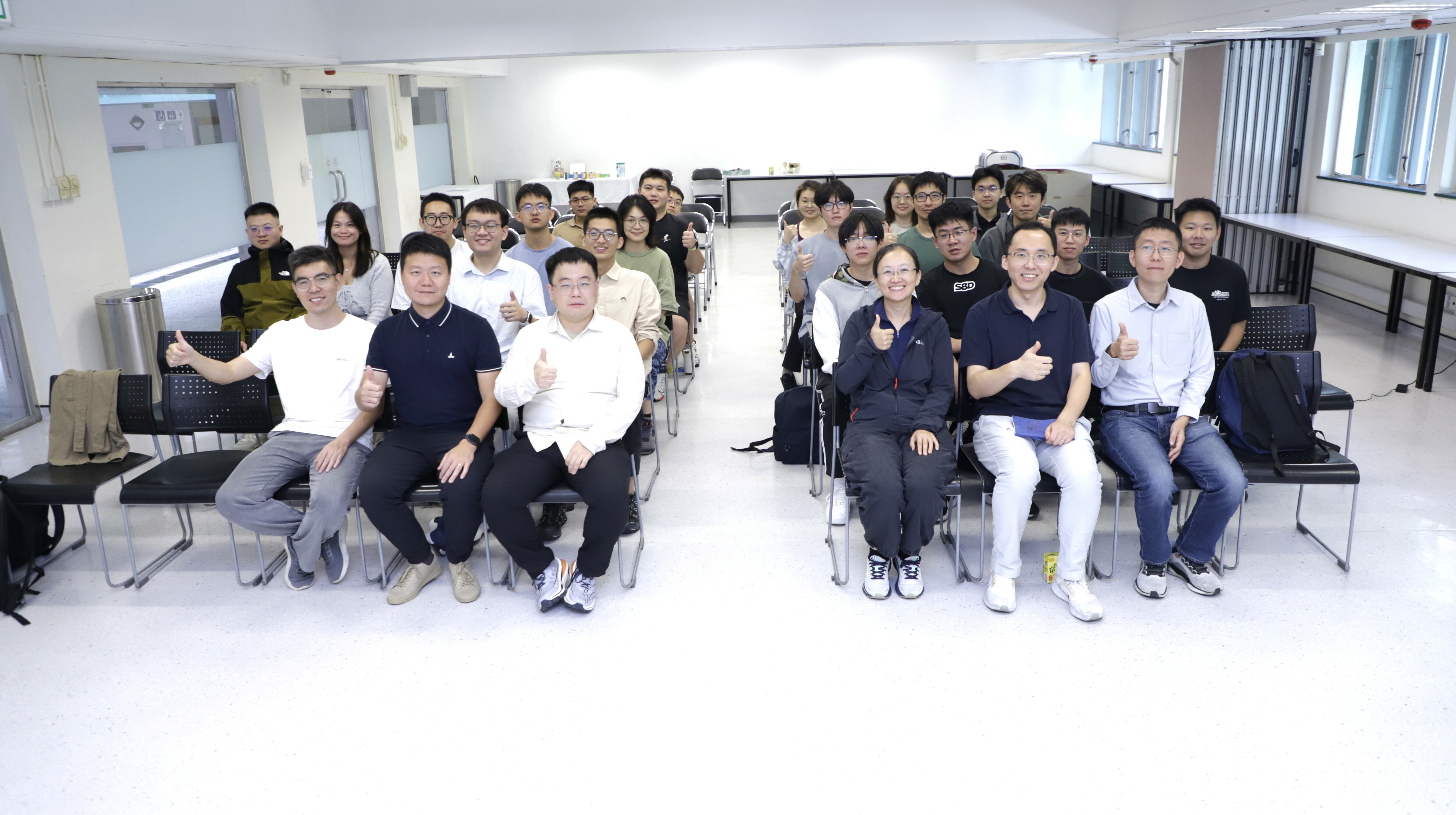
A day of rich idea exchange and interdisciplinary discussion among speakers, students and audience.
The workshop opened with a keynote lecture by Prof. Yong Wang from Zhejiang University, who presented on “Multiscale Integrative Structural Biology: Where MD, Exp. Data, and AI Meet.” Prof. Wang discussed how molecular dynamics simulations, hybrid experimental restraints, and AI-based modeling can be effectively combined to bridge multiple spatial and temporal scales in studying macromolecular structures. His talk demonstrated how integrative strategies can reveal nuanced conformational dynamics that traditional methods alone may overlook.
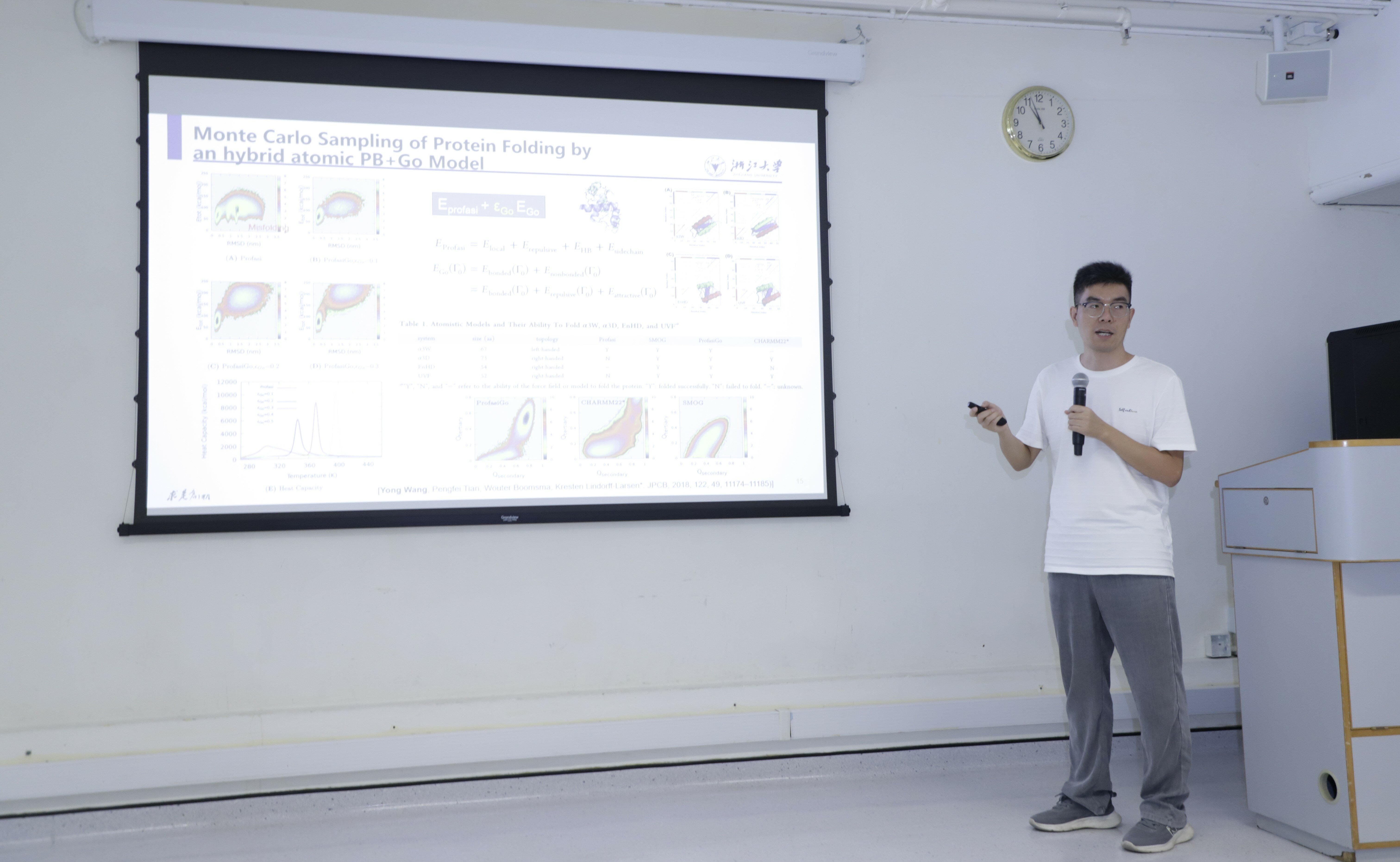
Prof. Yong Wang from Zhejiang University.
Following this, Prof. Xiakun Chu from HKUST (Guangzhou) delivered a seminar on “Coarse-Grained Molecular Dynamics Simulations of 3D Genome Architecture, Dynamics, and Function.” He highlighted how physically grounded coarse-grained models can capture the global organization principles of the genome and uncover regulatory mechanisms encoded in chromatin structure. The presentation sparked extensive discussion among attendees interested in connecting genomic architecture with gene regulation.
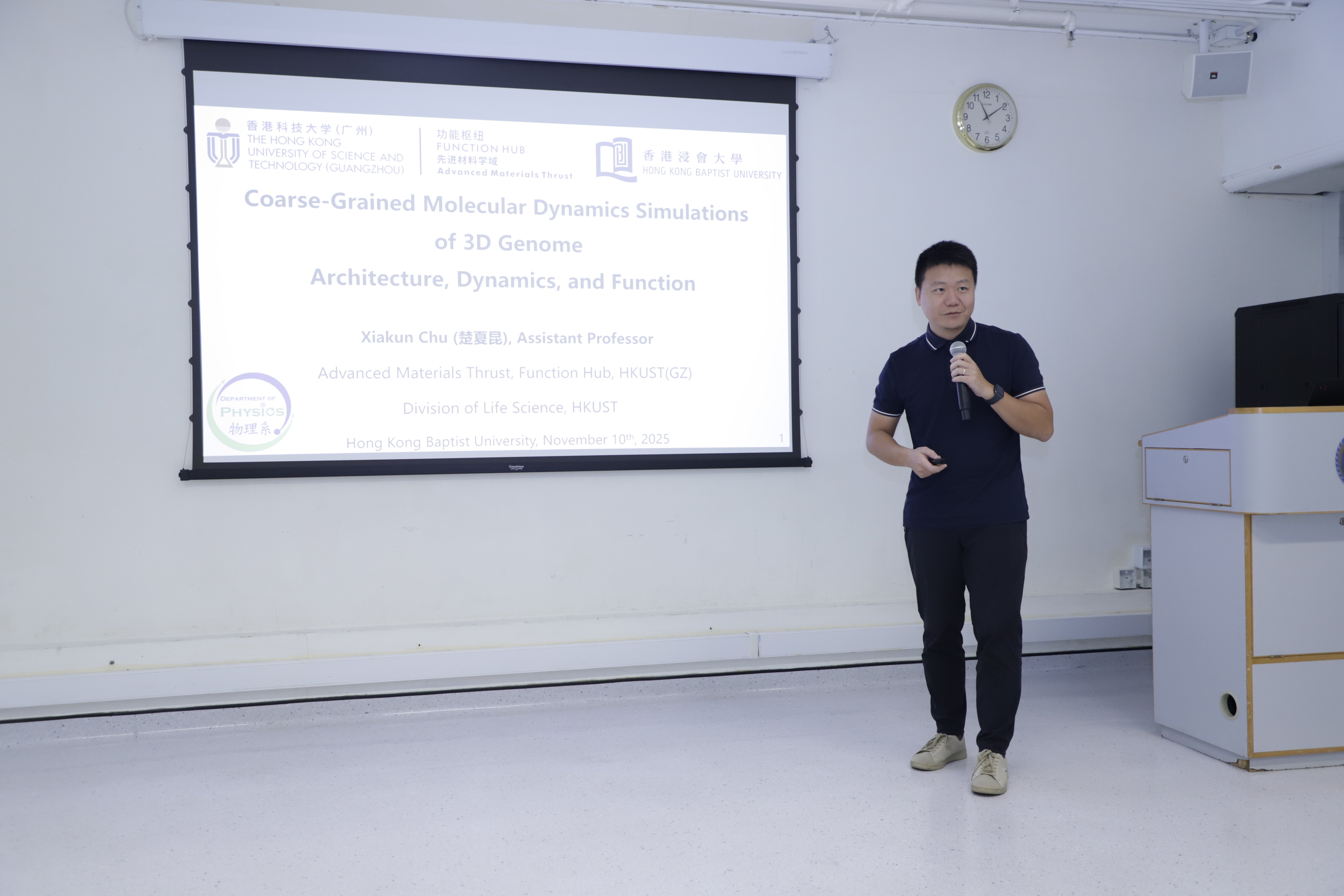
Prof. Xiakun Chu from HKUST (Guangzhou).
In the afternoon, Prof. Hao Wang from Shandong University delivered a seminar titled “Modeling and Analyzing Molecular Kinetics in Biological Systems.” His presentation concentrated on the theoretical foundations of molecular dynamics, introducing enhanced sampling strategies and the Milestoning framework as powerful tools for linking fast local fluctuations to long-timescale behaviors. His talk provided a clear and rigorous perspective on how these methods enable quantitative analysis of complex biomolecular transitions.
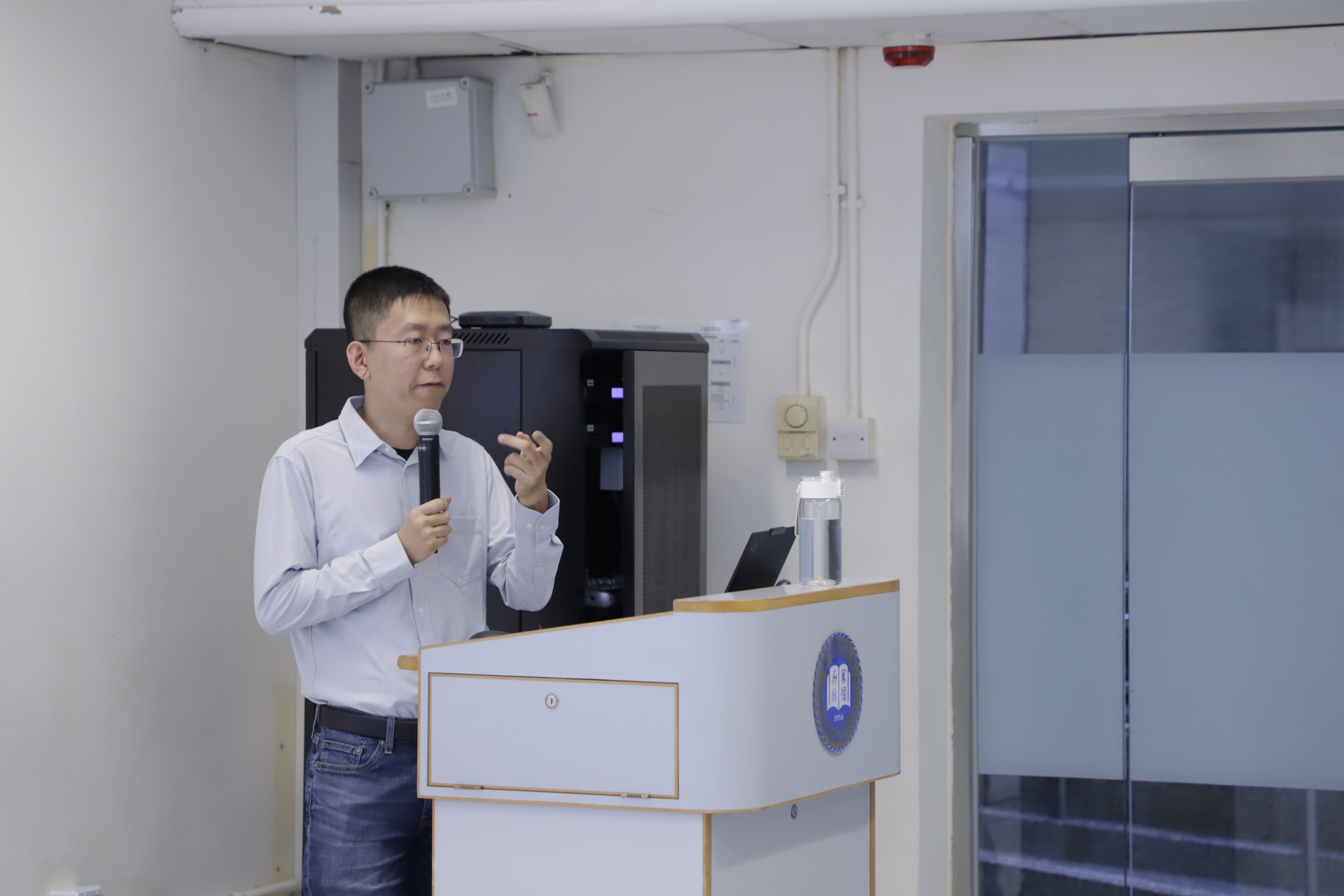
Prof. Hao Wang from Shandong University.
The final session featured a focused panel discussion titled “The AI Revolution in Biomolecular Dynamics: What’s Next?” chaired by Prof. Qianyuan Tang and Prof. Xiangze Zeng. The discussion explored how AI can refine predictions of mutational effects, strengthen the integration of physical models with data-driven approaches, and accelerate multiscale simulations. During the session, Mr. Fangke Chen, PhD student from our department, presented his recent work on developing an effective approach for simulating biomolecular phase separation, drawing strong interest and highlighting the workshop’s value in nurturing young researchers.
Prof. Yi Wang from CUHK and her group members also attended the workshop by invitation, contributing significantly to the workshop’s engaging and dynamic atmosphere.
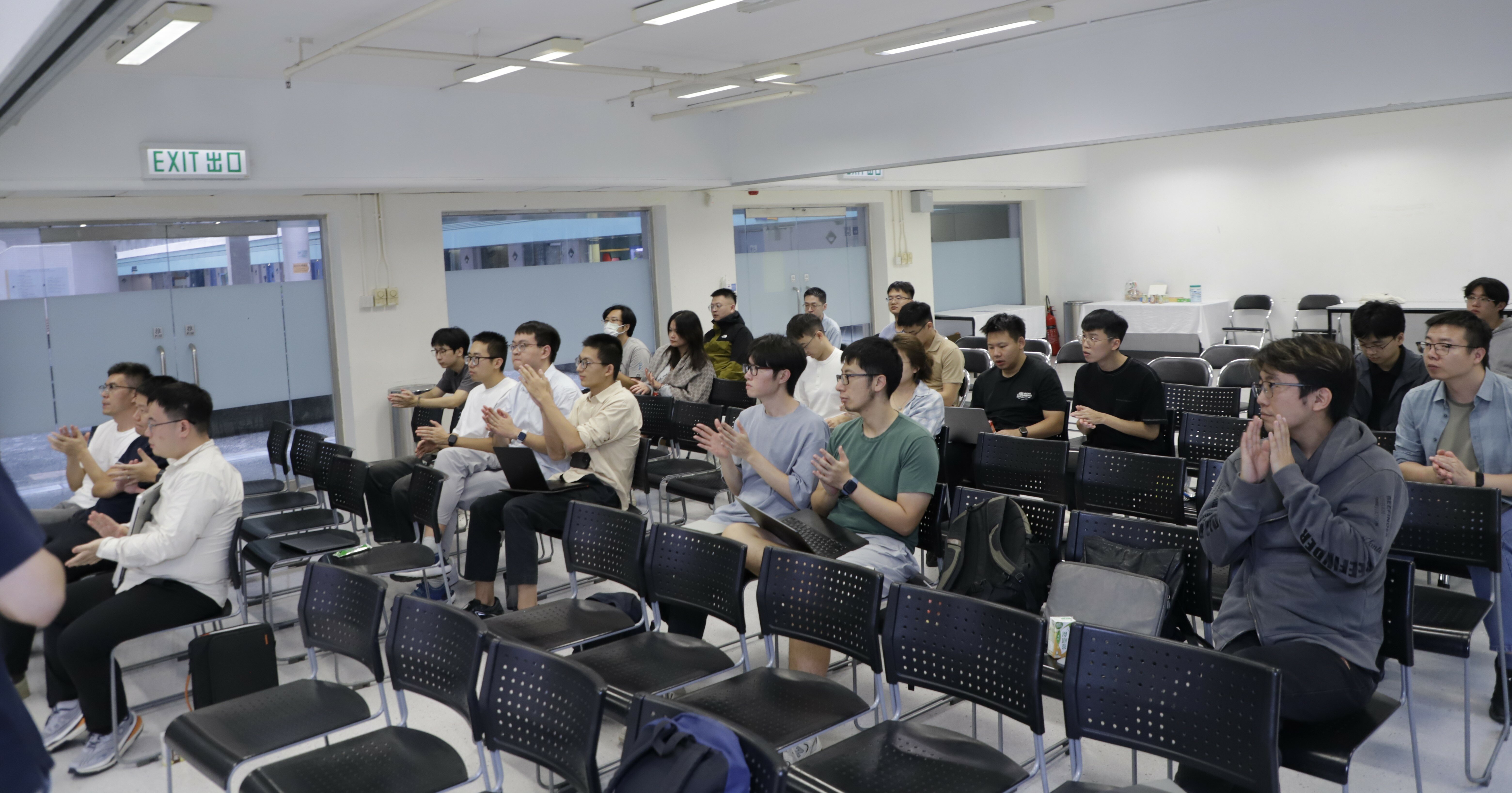
A day of rich idea exchange and interdisciplinary discussion among speakers, students and audience.
Overall, the workshop brought together experts, early-career researchers, and students in an open and interdisciplinary setting, and featured stimulating discussions between the speakers and the audience, fostering a rich exchange of ideas. Building on this success, the Department of Physics will continue to organize activities that foster cross-disciplinary research and advance computational biophysics and AI-enabled scientific discovery.